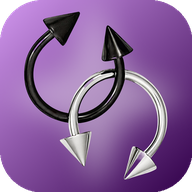
Flat-back labret stud (the healing standard)
16g implant-grade titanium with a flat disc inside the mouth — the starter for labret, Monroe, Medusa, and bites placements alike.
"Lip piercing" is a family, not a single spot: labret below the lip, Monroe and Medusa above it, side lip rings, and paired bites. Placement changes the whole look — this guide maps the options so you can pick the one that fits your face.
Reviewed and updated 2026-07-22
A lip piercing is any piercing through or around the lips, worn with a labret stud or a ring. The classic placements: the labret (centered below the lower lip), the side lip (off-center below the lower lip, the usual spot for a ring), the Monroe (upper lip, left side, beauty-mark style), and the Medusa or philtrum (centered in the groove above the upper lip).
Then come the paired sets — snake bites (both sides of the lower lip), angel bites (both sides of the upper lip), and spider bites (two close-set holes on one side). Pairs double the jewelry, the cost, and the healing care, but they create symmetry a single stud can't.
All of them share one anatomy quirk: two surfaces. The outside heals like a facial piercing while the inside disc sits against your teeth and gums — which is why jewelry fit and a piercer who marks placement against your bite matter so much.
Most lip placements land around 4 out of 10 — a sharp pinch and brief sting, over in a second. The lip area is well supplied with nerves, so it is more of a jolt than a lobe, but the tissue is thin and the needle passes fast.
Expect a fat-lip feeling for the first few days: swelling, warmth, and awareness every time you talk or smile. Placements through the lip edge itself swell more than those in the flat skin above or below the lips. Cold drinks and sleeping elevated help the first nights.
Lip piercings heal in about 6 to 12 weeks. Week one is the adjustment: bite carefully so you don't catch the jewelry, keep acidic and spicy food off the fresh channel, and rinse with alcohol-free mouthwash or saline after meals since the inside of the piercing lives in your mouth.
The long-term watch item is your gums: once swelling drops, have the piercer downsize the post so the inside disc stops pressing and rubbing against gum tissue. A snug fit is the difference between a lip piercing your dentist never mentions and one they lecture you about.
The 16g labret stud is the backbone of nearly every placement; rings come later and only suit some spots.
16g implant-grade titanium with a flat disc inside the mouth — the starter for labret, Monroe, Medusa, and bites placements alike.
The visible end is swappable once healed: a tiny bezel-set gem reads delicate, a plain ball reads classic. One piercing, many looks.
The lip-ring look works best on side lip placements where the ring can hug the lip edge. Save hoops until fully healed — they move with every word.
Not a style but the most important purchase: a shorter post after swelling drops protects your gums and teeth for the life of the piercing.
| Feature | Side lip | Medusa |
|---|---|---|
| Placement | Off-center, below the lower lip | Centered in the philtrum above the upper lip |
| Look | Casual, ring-friendly, asymmetric | Symmetric focal point above the cupid's bow |
| Jewelry | Labret stud or ring | Labret stud only |
| Pain | Around 4/10 | Around 4/10 |
| Suits | Edgier, lived-in styles | Defined cupid's bow, polished looks |
Decide between labret, side, Monroe, Medusa, or a paired set — preview them on your own photo first, because placement changes the look more than jewelry ever will.
The piercer marks the spot with your mouth relaxed and checks where the inside disc will sit against your teeth and gums.
A single-use hollow needle passes through in a second, and the long starter labret goes in to leave room for swelling.
Once swelling is gone, the piercer fits a shorter post. This visit protects your gums — do not skip it.
Around 4/10 for most placements — a sharp pinch that is over fast, followed by a few days of fat-lip swelling. Paired sets like snake bites hurt the same per hole; you just feel it twice.
6 to 12 weeks for most placements. The outside settles quickly; the inside needs your cooperation — rinse after meals and get the post downsized once swelling drops.
Typically $30–$80 in the US for a single placement with a quality starter labret. Paired sets like snake bites run $60–$140 since you are paying for two piercings and two pieces of jewelry.
Yes, with care. For the first week take smaller bites, chew away from the jewelry, skip spicy and acidic foods, and rinse after eating. Most people stop thinking about it by week two.
Labret and side lip read casual and take rings; Monroe and Medusa are upper-lip focal points that stay studs; bites create symmetry. Your lip shape and smile decide a lot — previewing each spot on your own photo settles it faster than any list.
Some placement flatters almost every face — the question is which one. Upload a photo and preview labret, Medusa, Monroe, and side placements side by side in the PiercingAI app before you book anything.
Piercing Types
The labret sits centered just below your lower lip — a clean, symmetrical face piercing that has moved effortlessly from punk staple to minimalist classic. One word of warning up front: 'labret' names both this piercing and the flat-back stud style worn in half the piercings on this site.
Piercing Types
A Monroe piercing is a single stud on the upper lip's left side, placed to mimic Marilyn Monroe's beauty mark. It is one of the most deliberately glamorous facial piercings — a tiny gem that reads like a permanent accent rather than hardware.
Piercing Types
A Medusa piercing — also called a philtrum piercing — sits dead center in the groove above your upper lip. One tiny stud, placed on your face's axis of symmetry, and it becomes the focal point of your whole look. Few piercings change a face this much with this little metal.
Piercing Types
Snake bites are a symmetrical pair of piercings on the lower lip, one on each side — named for the two-point look of a snake's strike. They read bolder than a single lip piercing precisely because they frame the whole mouth, and they come with double-piercing logistics worth understanding first.
Piercing Tools
Aftercare advice used to mean alcohol swabs and twisting the jewelry daily. The professional consensus has completely reversed: clean gently, touch rarely, and let your body do the work. Here is the routine, start to finish.
Virtual Try-On
PiercingAI places any piercing onto a photo of you and renders it photorealistically — your skin, your lighting, your actual anatomy — so you know the answer before a needle is involved.