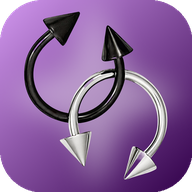
14g straight barbell (the standard)
Implant-grade titanium, sized by your piercer with a little initial swelling room, then downsized snug. A properly fitted bar is the single biggest factor in avoiding migration.
A bridge piercing runs horizontally through the skin at the top of your nose, right between the eyes. It is one of the boldest face piercings you can get — and, crucially, it is a surface piercing, which shapes everything about how it heals and how long it stays.
Reviewed and updated 2026-07-22
A bridge piercing (sometimes called an Erl) passes horizontally through the pinchable skin on the bridge of the nose, sitting level with or just below your eyes. The barbell's two beads show on either side of the bridge, framing the space between your eyebrows.
Here is the fact that matters most: the needle never touches bone or cartilage. A bridge is a surface piercing — it travels through a pinch of skin over the nasal bone, not through the nose itself. That makes the procedure less dramatic than it looks, but it also means the piercing lives under surface-piercing rules: the body can slowly push it out over time.
Placement is precision work. The barbell must sit level with your eyes and centered on your face, and there has to be enough pinchable tissue to hold it. This is a placement to trust only to an experienced piercer — a millimeter of asymmetry here is visible from across the room.
Most people put a bridge at around 5 out of 10 — genuinely less than it looks like it should hurt. Because only a pinch of skin is pierced, there is no bone or cartilage resistance; the strangest part is watching the needle cross your field of vision, not the sensation itself.
Expect watering eyes as a reflex, a dull ache for a day or two, and light bruising between the eyes in some cases. Tenderness fades quickly compared with cartilage piercings.
The initial heal is fast — 8 to 12 weeks for the channel to settle, one of the shorter timelines in piercing. But a bridge's real challenge is not healing; it is staying. Like all surface piercings, the body can treat the barbell as a foreign object and slowly migrate it toward the skin's surface until it rejects entirely.
Be honest with yourself about the odds: many bridges last for years, but a significant share migrate within a few years, and a rejected bridge leaves a small scar between the eyes. The best defenses are generous anatomy (enough pinchable tissue), a properly fitted straight barbell, and leaving it alone — no glasses pressure, no picking, no snags.
Watch for the warning signs: the skin between the entry and exit points thinning or reddening, the barbell sitting shallower, or more of the bar becoming visible. If you see them, go back to your piercer — retiring the piercing early leaves far less scar than letting it reject fully.
If you wear glasses, measure before you book. Most frames rest on the nose pads well below a properly placed bridge piercing, so the two usually coexist — but low-sitting frames, heavy acetate styles, and sunglasses that slide down can rest directly on the barbell.
During the first weeks, any repeated pressure matters more: pick your frames deliberately, push them up before they touch the jewelry, and consider contacts for the initial heal if your glasses sit high. Bring your everyday frames to the consultation — a good piercer will place the barbell around them.
This is straight-barbell territory — fitted to your anatomy, with small ends that stay out of your eyeline.
Implant-grade titanium, sized by your piercer with a little initial swelling room, then downsized snug. A properly fitted bar is the single biggest factor in avoiding migration.
3mm-ish beads or low-profile discs keep the piercing symmetrical and subtle. Oversized ends sit in your peripheral vision and catch on glasses and towels.
Bezel-set stones on both ends dress the piercing up once it is stable — keep them matched, since asymmetry between the eyes is instantly noticeable.
On some bridges a slight curve follows the tissue better and reduces pressure at the exits. Your piercer chooses this based on your anatomy, not aesthetics.
| Feature | Bridge | Septum |
|---|---|---|
| What is pierced | A pinch of skin at the top of the nose (surface) | The soft tissue below the nasal cartilage |
| Pain | Around 5/10 | Around 6/10 with a sharp sting |
| Healing | 8–12 weeks, but lifelong migration risk | 6–12 weeks, very stable long-term |
| Can you hide it? | No — it sits between your eyes | Yes — a retainer flips up inside the nose |
| Permanence | May migrate or reject over years | Usually stays as long as you want it |
Around 5/10 — less than most people expect. Only a pinch of skin is pierced, never bone or cartilage. The oddest part is seeing the needle between your eyes; expect watering eyes and a day or two of dull ache.
8 to 12 weeks for the initial heal, which is fast. The long-term question is different: as a surface piercing, a bridge can migrate over months or years, so 'healed' never quite means 'permanent'.
It can. Bridges are surface piercings, and some migrate out over time even with perfect care. Good anatomy, a well-fitted barbell, and avoiding pressure improve the odds. If the skin over the bar thins or reddens, see your piercer — retiring it early minimizes scarring.
Usually yes — most frames rest below a properly placed bridge. The exceptions are low-sitting or heavy frames and sliding sunglasses. Bring your everyday glasses to the consultation so your piercer can place the barbell around them.
Typically $50–$100 in the US including implant-grade titanium jewelry. Placement precision matters enormously here, so choose an experienced piercer over a cheap one — asymmetry between the eyes cannot be hidden.
It depends on your bridge anatomy, brow spacing, and whether you wear glasses. Previewing a bridge barbell on a photo of your own face — with and without your frames — shows you exactly how bold it reads before you commit.
Piercing Types
The septum piercing sits in the thin wall between your nostrils and has gone from counterculture badge to mainstream staple — partly because it heals fast for a nose piercing, and partly because it is the only facial piercing you can genuinely hide in seconds.
Piercing Types
When people say 'nose piercing' they almost always mean the nostril — a small stud or hoop through the curve of the nostril, and one of the most worn piercings on earth. It is subtle, endlessly customizable, and sits right in the middle of your face, which makes placement the whole game.
Piercing Types
A surface piercing runs a barbell horizontally under a flat stretch of skin, with both decorated ends sitting on top — no rim, ridge, or fold involved. It is the technique behind sternum, nape, hip, and wrist piercings, and it comes with one honest caveat: the body eventually fights some of them.
Piercing Types
The eyebrow piercing — a curved barbell through the ridge at the outer third of the brow — is the classic face piercing: instantly visible, quick to heal by piercing standards, and easier on the pain scale than almost anything else on this site. Its one honest weakness is that it may not be forever.
Piercing Tools
The chart above ranks every piercing from the 2/10 earlobe to the 8/10 snug. This guide explains where those numbers come from — the tissue science, the psychology, and the things that genuinely move a piercing up or down the scale.
Virtual Try-On
A nose piercing sits in the middle of every photo you'll ever take, so guess wrong and you'll know it daily. PiercingAI renders studs and hoops on your actual nose before the needle decides for you.